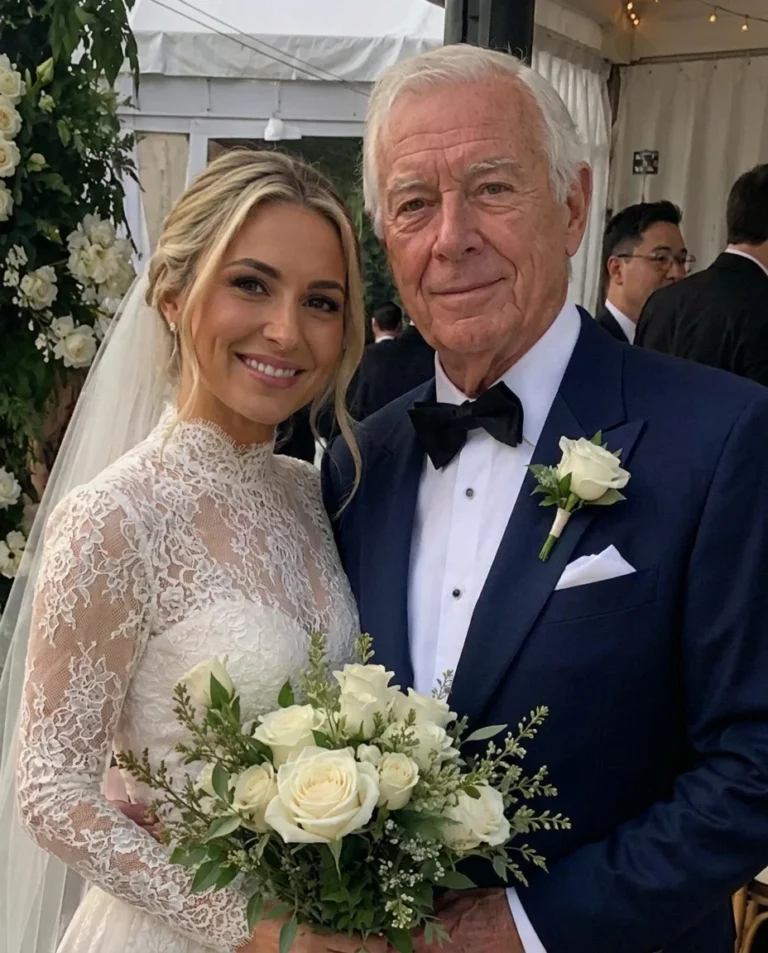
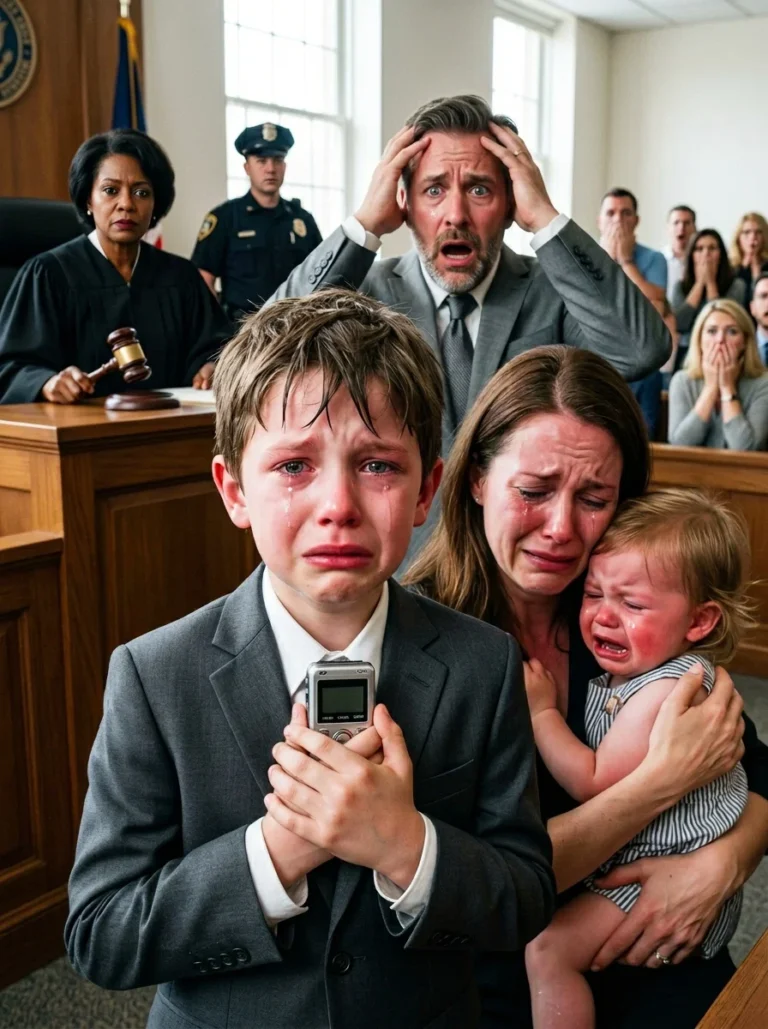
Moja macocha uderzyła mojego 4-letniego syna za to, że powiedział, że będzie na naszym ślubie. „On nie jest rodziną!” – krzyknęła. Na rozprawie, kiedy odtworzono nagranie jej molestowania, mój ojciec wziął ją za rękę na znak wsparcia. Spojrzałam na niego i powiedziałam: „Wybrałeś potwora”.
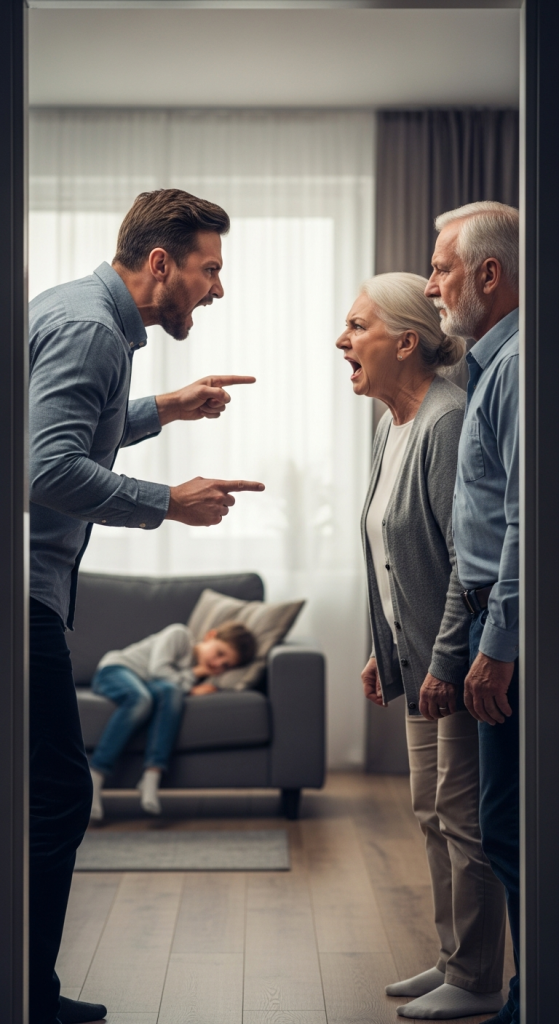
For nearly two decades, my father didn’t just live with a wife; he lived under an occupation. My stepmother, a woman I shall refer to as Vanessa, was not merely a spouse. She was a self-appointed architect of joy, a “wannabe party planner” who ruled every family gathering with an iron fist wrapped in pastel velvet. To the outside world, she was the glue holding us together. To me, and later to my wife, she was a dictator who mistook control for affection and narcissism for matriarchy.
I tolerated her for years. I swallowed my pride when she hijacked my graduation, bit my tongue when she redecorated my childhood bedroom the week I moved out, and looked the other way when she preened under compliments for parties she forced upon us. My father, a man I once viewed as a pillar of strength, had long since eroded into a foundational support for her ego. “It makes her feel included,” he would whisper, a mantra of surrender.
But appeasement only works until the tyrant demands something you cannot give. For me, that line was drawn in the sand the moment she laid hands on my son.
I am twenty-eight, a man with a messy, beautiful life. My fiancée, Jane, is the steel in my spine. We have a fourteen-month-old biological son, and Luke, a bright-eyed four-year-old whom Jane adopted after his parents—her father and stepmother—died tragically. Luke doesn’t call me “Dad” yet; he calls us his sister and his “Op,” a nickname born of toddler babble that stuck. But blood is a poor metric for love. That boy is my son in every way that matters.
Vanessa, however, viewed Luke as a contaminant. She accused Jane of “baby-trapping” her way into the dynasty Vanessa imagined she ruled. When our biological son was born, her disdain for Luke sharpened into a cold, jagged weapon. She demanded my father refuse to babysit him. She ignored him at gatherings. She treated him like a prop that ruined her aesthetic.
The war began in earnest over our wedding. We had been engaged since 2021, a long engagement stretched thin by pregnancy and life. Vanessa viewed our nuptials not as a union of souls, but as a stage for her talents. She bombarded our planner, ambushed Jane at dress fittings, and wept dry tears when we refused to list her as “Mother of the Groom” on the invitations.
“Humor her,” my father begged, his eyes pleading for peace at the cost of our sanity.
We refused. And the resentment within her began to curdle into something volatile.
Last Sunday, the levee broke. We had a commitment we couldn’t miss, and our usual support network—Jane’s brother and sister-in-law—were out of town. Against my better judgment, a judgment I will question for the rest of my life, I accepted my father’s offer to babysit at our house. I assumed, foolishly, that he would come alone. Or that even if she came, her desire to maintain her public image would keep her in check.
We returned three hours later to a scene that permanently altered the trajectory of our lives.
The air in the living room was thick, smelling of tension and the metallic tang of adrenaline. Both children were screaming—not the fussy cry of tired toddlers, but the high-pitched, terrifying wail of distress. My father was fluttering uselessly between them, a ghost in his own body, while Vanessa stood in the center of the room, her face contorted into a mask of pure vitriol.
“He is a liar and a brat!” she shrieked as we burst through the door.
I didn’t look at her. I looked at Luke. He was curled into a ball on the sofa, clutching his face. When I pulled his small hands away, I saw it. His lip was split, swollen and bleeding, a stark crimson mark against his pale skin.
The story spilled out in jagged fragments. Luke, in his innocent excitement, had told Vanessa that he and his baby brother were going to be ring bearers. This innocent declaration shattered Vanessa’s reality. She went ballistic. She screamed that she wouldn’t allow it, that Luke “wasn’t family,” that he was polluting the wedding photos. And when he started to cry… she struck him.
In that moment, the fog of “keeping the peace” lifted. I wasn’t a son placating a stepmother anymore. I was a father protecting his cub.
“Get out,” I said. My voice was dangerously quiet.
“You don’t understand, he was—”
“Get. Out.”
I physically steered them toward the door. My father looked at me, shocked by the sudden reversal of power, while Vanessa spat insults about Jane and “that stray kid.” I slammed the door on her screaming face, locking it with a finality that echoed in my bones.
But as I turned back to my weeping family, seeing Jane press a bag of frozen peas to Luke’s swelling lip, I realized with a sick dread that banning her from the house wasn’t the end. We had just declared war on a woman who had never been told “no” in her life.
And we had forgotten that a cornered animal doesn’t just cower; it bites.
The days following the assault were a blur of sterile doctor’s offices and hushed, furious conversations. We took Luke to the pediatrician the next morning. The doctor documented the injury—a shallow split, thankfully requiring no stitches, but the bruise on his soul would take longer to heal. We started him with a counselor immediately. Jane, traumatized by the loss of her own parents, was terrified the instability would break him. But Luke is resilient; he is made of sterner stuff than the woman who hurt him.
We decided to press charges. It wasn’t a decision we made lightly, but when we reviewed the footage, the choice was made for us.
By a stroke of miraculous luck—or perhaps paranoia born of experience—we had a nanny cam in the living room. Vanessa hadn’t noticed it. The camera didn’t catch the physical strike; they were just out of frame. But it captured the audio. It captured the vitriol. It captured the sound of the slap, the immediate silence, and then the heart-wrenching wail of a child realizing he isn’t safe. It captured Vanessa screaming, “You are not one of us!”
We had her.
My father, however, was already spinning his web of denial. He called incessantly. “She’s distraught,” he told me, his voice thick with misplaced sympathy. “It was an accident. He startled her. You know how she gets with her anxiety.”
“She hit a four-year-old, Dad,” I said, my hand gripping the phone so hard the plastic creaked. “There is no context where that is acceptable.”
He issued his ultimatum then. He would not attend the wedding without her. He was convinced that if he just boycotted, I would fold, just as I had folded about the graduation, the holidays, the birthdays. He began to poison the well, calling aunts, uncles, and cousins, downplaying the assault to a “misunderstanding” and painting Jane and me as ungrateful children weaponizing our kids against a devoted grandmother.
My stepbrother, Kyle, fell in line immediately. He was Vanessa’s biological son, the golden child of her first failed marriage. “You’re overreacting,” he texted me. “Mom would never hurt a fly. Luke probably fell.”
The gaslighting was suffocating. Cousins I hadn’t seen in years were messaging me, asking us to “reconsider” for the sake of the family. Only Jane’s family stood firm, a phalanx of support protecting us from the fallout.
To understand why this betrayal cut so deep, you have to understand the Pink Nightmare of 2021.
It was a memory that kept resurfacing as I stared at the restraining order paperwork. When Jane was pregnant, Vanessa had tried to hijack the baby shower. We wanted a co-ed pizza party—simple, warm, authentic. Vanessa wanted a coronation for herself as “Nana.” She tried to bulldoze our planners, my sister Laura and Jane’s best friend Nina, with a binder full of pink, frilly, expensive nonsense.
When we told her “no,” she went rogue. Two days before the shower, she secretly dropped off boxes of her own decorations at the venue, planning to arrive early and transform our pizza party into a Barbie-themed hellscape. Laura caught her. In a covert operation that remains a family legend, Laura and Nina distracted Vanessa with a fake salon coupon while we tore down her unauthorized decorations and restored the party to our vision just minutes before guests arrived.
I remembered Vanessa sulking in the corner that night, furious that she hadn’t been allowed to center herself. I realized then that her love was performative. She didn’t want a grandson; she wanted a prop. And when Luke refused to be a prop—when he dared to exist as a person she couldn’t control—she tried to break him.
I looked at the legal documents on the table. The charge was child abuse. It was ugly. It was heavy. But as I watched Luke playing quietly with his Superman figurine, flinching slightly when the doorbell rang, I knew I would burn the entire family tree to the ground if it meant keeping him warm.
The phone rang again. My father.
“Son,” he said, his tone shifting from pleading to authoritative. “This has gone on long enough. Vanessa is willing to forgive you for the embarrassment if you drop this nonsense and apologize.”
The audacity stole the breath from my lungs.
“Forgive me?” I whispered.
“We’re family,” he said, as if the word was a magic spell that erased violence.
“No,” I said, feeling the final tether snap. “Luke is my family. Jane is my family. You? You’re just a witness for the defense.”
I hung up. And I waited for the summons.
The weeks leading up to the court hearing were a study in isolation. We went no contact. My sister, Laura, became the reluctant messenger pigeon, relaying my father’s oscillating moods of rage and confusion until even she had to step back for her own sanity.
The family was fractured. The “flying monkeys”—the older generation of aunts and cousins who valued appearance over truth—were officially uninvited. We took the money we saved from their plates and bought a plane ticket for Jane’s cousin in Brazil, a woman who actually loved us. It felt like a cleansing fire.
Then came the day of the hearing.
Walking into that courthouse felt like walking underwater. The air was heavy, the sounds muffled. Jane gripped my hand, her knuckles white. We had left the boys with her brother, safe from the toxicity.
I saw them in the hallway. My father looked ten years older, his posture slumped. Vanessa stood beside him, dressed in a muted beige suit, playing the role of the victimized matriarch to perfection. She refused to look at me.
The hearing was shorter than I expected. They hadn’t even hired a lawyer, perhaps arrogance leading them to believe they could charm a judge the way they charmed the PTA. But the law is cold, and facts are stubborn things.
We presented the photos of Luke’s split lip. We presented the pediatrician’s report. And then, we played the audio.
The courtroom fell silent as Vanessa’s voice filled the air, shrill and hateful. “You are not family! You are nothing!” Followed by the sickening sound of impact and the wail of a child.
I watched my father as the audio played. He flinched, closing his eyes. For a second, I thought I saw shame. But then he reached out and took Vanessa’s hand, squeezing it in support. That gesture told me everything I needed to know. He knew who she was. He had always known. He just didn’t care, as long as he didn’t have to face it alone.
The judge granted the protection order immediately. Five hundred feet. No contact.
Walking out of those doors into the bright afternoon sun, I felt a physical weight lift off my chest. We had done it. We had drawn the line in concrete.
We celebrated with McDonald’s and hysterical laughter, the kind that comes after a near-death experience. But the victory was bittersweet.
That night, my father called. The order didn’t extend to him.
“Is this really necessary?” he asked, his voice hollow. “She’s your mother.”
“She is my wife’s abuser,” I corrected him. “And she attacked my son.”
“She only hit him once,” he said. The sentence hung in the air, grotesque and undeniable.
“Once is enough,” I said. “You had a choice, Dad. You could have protected your grandchild. You chose your wife. You chose the monster. Now you have to live with her.”
“I did everything for you,” he whispered.
“You did,” I agreed. “And then you watched while she tore it all down.”
I blocked his number. The silence that followed wasn’t empty; it was full of peace.
But the wedding was still approaching. The venue had been alerted, security hired. We had photos of Vanessa and my father distributed to the staff like a “Most Wanted” list.
I lay in bed that night, staring at the ceiling. Jane was asleep beside me, her breathing steady. We had won the battle, but the war for our peace of mind was ongoing. I wondered if they would try to crash the wedding. I wondered if my stepbrother would ever wake up.
I closed my eyes, picturing Luke walking down the aisle, safe and happy. That was the only victory that mattered.
The wedding day arrived with a forecast of rain that never materialized. Instead, the sky was a piercing, triumphant blue.
We married on a Saturday, four months after the assault. The absence of my father and stepmother was a physical thing, a void in the shape of parents, but it was filled rapidly by the overflowing love of Jane’s family and the relatives who actually stood by us.
There was no drama. No screaming woman in a white dress storming the altar. No father standing up to object. The security team I hired—worth every penny—stood discreetly at the perimeter, but they had nothing to do but look intimidating.
The highlight was the procession. Luke, dressed in a miniature tuxedo that made him look like a secret agent, held our baby son’s hand. He walked down the aisle with a seriousness that melted the heart of every person in the pews. His lip had healed, leaving no scar, but the bravery he showed in facing a crowd so soon after being hurt was the most beautiful thing I had ever seen.
Gdy Jane szła w moim kierunku, promienna i zadziorna, uświadomiłam sobie, że „rodzina” to nie rzeczownik, tylko czasownik. To to, co robisz. To dawanie o sobie znać. To chronienie.
Tańczyliśmy, aż nam stopy krwawiły. Wypiliśmy za dużo szampana. I po raz pierwszy w życiu nie martwiłem się, czy impreza była wystarczająco „idealna” dla Vanessy. Była chaotyczna, głośna i nasza.
W kolejnych miesiącach kurz zaczął opadać. Cisza w obozie mojego ojca była absolutna, z wyjątkiem sporadycznych latających małp, które natychmiast odganialiśmy.
Potem pęknięcie w lodzie.
Mój przyrodni brat, Kyle, zwrócił się do mnie o pomoc.
Zaczęło się od SMS-a z okazji moich urodzin. Potem nieśmiała prośba o kawę. Poznałam go w sierpniu, zostawiając Jane i dzieci w domu. Wyglądał na zmęczonego. Pozory „Złotego Dziecka” pękały.
„Skłamała” – powiedział, wpatrując się w swoją czarną kawę. „Powiedziała mi, że Luke uderzył ją pierwszy. Powiedziała mi, że nakrzyczeliście na nią bez powodu”.
„I uwierzyłeś jej?” – zapytałem bez złośliwości.
„Zawsze jej wierzę” – przyznał. „Tak jest łatwiej”.
Ale nakaz sądowy nim wstrząsnął. Nagranie audio – które puściła mu moja siostra – zburzyło jego zaprzeczenie. Chodził na terapię. Zdawał sobie sprawę, że kobieta, która go wychowała, była narcyzem, który postrzegał ludzi jako przedłużenie siebie.
Przez kolejne cztery miesiące odbudowywaliśmy most, który uważałem za spalony. To była powolna praca. Zaufanie trudno wypracować w spalonej ziemi. Ale w październiku przyszedł na obiad. W listopadzie Luke pokazał mu swoje rysunki.
Kyle zerwał kontakt z toksyczną matką, utrzymując relację o niskim poziomie kontaktu, która była czysto powierzchowna. Wybrał nas. Wybrał rzeczywistość.
Jest już grudzień. Święta zbliżają się wielkimi krokami i po raz pierwszy, odkąd pamiętam, nie boję się ich. Nie ma żadnego segregatora wymagań. Nie ma żadnego narzuconego dress code’u.
Spędzamy święta Bożego Narodzenia w Brazylii z rodziną Jane. Będzie gorąco, głośno i chaotycznie. Będziemy jeść potrawy, których nie potrafię wymówić, i śmiać się z żartów, których ledwo rozumiem.
Mój ojciec jest sam w domu z Vanessą. Dochodzą mnie słuchy, że jest nieszczęśliwy, że izolacja go zżera. Wysyła SMS-y do mojej siostry, na które nikt nie odpowiada – słabe przeprosiny, skargi na stan zdrowia, wyłudzanie informacji o wnukach, z którymi nie może się widywać.
Czuję fantomowy ból tam, gdzie kiedyś była moja relacja z nim. Kocham go. Zawsze będę kochać. Ale kocham go jak dom, w którym spędziłem dzieciństwo i który został skazany na zagładę – czule, ale z dystansu, wiedząc, że nie jest już bezpiecznie do niego wejść.
W tym roku nauczyłem się czegoś niezwykle ważnego. Dowiedziałem się, że nie da się uratować kogoś, kto nie chce być uratowany. Mój ojciec dokonał wyboru. Wybrał drogę najmniejszego oporu, nie zdając sobie sprawy, że prowadzi ona do przepaści.
A ja? Patrzę na moją żonę, która śpi smacznie. Patrzę na nianię elektroniczną, gdzie moi dwaj synowie są bezpieczni, kochani i chronieni przed trucizną, która zatruła moje własne dzieciństwo.
Moje życie to istny bałagan. Są rachunki za usługi prawne, wizyty u terapeuty i ciągła trauma po rozpadzie rodziny. Ale to piękny bałagan. To forteca, którą zbudowaliśmy własnymi rękami, a most zwodzony już stoi.
Dyktator upadł. Zamach stanu dokonany. A w ciszy, w której kiedyś panował jej krzyk, w końcu słyszymy dźwięk naszego własnego szczęścia.